Friday, June 5, 2015

Meet the Gente

I’ve spent almost two years blogging about my experience in Panama, and I realized that I’ve yet to dedicate a blog post to all of the people that have made my experience what it is.  So with this post, I want to introduce you to some of the people that live in my little corner of Panama- my gente. 


Diana

Diana is a wife and mother of three beautiful, talented, and smart girls.  Her oldest two have won the award for being at the top of their class each year, and it’s not hard to see who they get their drive from.  Serving as the Treasurer for our town’s agricultural group, Diana is a community leader in a culture that hasn’t historically valued women in that sense.  When she was one of only two women in a group of 25 to attend a Peace Corps workshop on project management and leadership, another volunteer asked what gave her the encouragement to do so.  Her reply has become one of my favorite Peace Corps anecdotes- she attended a Peace Corps youth leadership camp as a teenager! 


Lirisnel

Lirisnel, or simply “niña,” as she’s usually addressed, is my most frequent visitor and one of Massy’s best friends.  She loves animals, rough-housing with her 3 brothers, and telling me stories that may or may not be true.  For another dose of cuteness from my favorite neighbor, you can see her short cameo in my house tour video.


Lucia

My baking buddy, Lucia, is a mom of three and one of the only women to take what we’ve learned in our baking and business classes and put it to use.  She recently told me that she’s started making the 4-hour round-trip commute to the nearest University each weekend so that she can finish her degree.   As if that didn’t make me proud enough, she finished the story by telling me that the money she earns by selling cakes and cookies to her fellow students pays for her transport each weekend!


Walter and Nereyda

One of my favorite couples in site, Walter and Nereyda are my age and are hardworking and determined to give their two sons a better life.  When they heard that the people I was planning on bringing to an agribusiness seminar dropped out last minute, they made plans to go with me the very next day.  Not only did they actually attend and participate, now they’re always asking me about potential projects and business advice.  When Walter’s not around, I love to joke with Nereyda about how much I don’t know about having a family, and though she laughs at my complete lack of childcare/household running knowledge, she likes to give me advice for my future.   She may be young, but that girl knows what she’s talking about!


Adelaida

As my host family's granddaughter, Adelaida was by my side constantly throughout my first few month in site.  Sometimes she wouldn't even go back home to her own house next door in favor of spending the night with me- after she washed my hair while I was trying to bathe in the creek that is. Though it was occasionally a little trying to never have a moment alone, I came to love Adelaida like a little sister and miss her terribly now that she's moved to another village.  She's visited me a few times though, and we're trying to make plans for me to visit her soon too! 


Chuber

Until a formal ceremony on his second birthday, I didn’t even know that Chuber’s real name is Virgilio.  Definitely more “Chuber” to me, this little guy is about the only other person in site with a sweet tooth to match my own.  Whenever I visit his house his response is always the same: “GELI! Dulce! Tienes dulce?” Which is, “GELI!  Dessert!  Do you have dessert?”


Milsa

Since Milsa spent my first year helping her daughter care for her new baby about an hour away, I didn’t get to know her until what feels like recently.  When I visit her (not often enough, in her opinion) she loves to show me her newest sewing projects and never hesitates to make sure I have plenty to eat.  So, it’s not hard to see why I consider her one of my in-site grandmas.


Abraham

My closest neighbor (and father of Lirisnel, Nata, and Einar) doesn’t visit my house very frequently, but I can count on him stopping by within a few hours of any guest arriving.  Because of him, I’ve been able to see my community in a whole new light; He loves our town and sharing it with other people and never hesitates to offer tours to the various points of interest: waterfalls, pretty views, animal searches… Last week he even took me on a camping trip!


Pedro and Chavela (and family)

As my unofficial in-site grandparents, Pedro and Chavela are happy to sit and chat with me as often as I want to visit.  After apologizing for the lack of tasty food, they usually send one of their sons or grandsons out to chop down a fresh coconut for me to drink- one of my favorite snacks!  As Christian leaders in the community, they’ve taken the time to pray for me (after every visit) and occasionally help me with a Spanish Bible study.  This sweet family even volunteered to host the new volunteer during his/her first few months in site- quite lucky if you ask me!


Virginia

Back when I was a new Peace Corps volunteer, starving for honest friendship and just plain starving in general (I was almost 20 pounds lighter than I am currently… more on that later), Virgina and her sister in law, Veronica, were some of the first people to take me in and really make me feel like I belong here.  Once, when I admitted that I was sad and missing my family, she told all of her children to start referring to me as “Tia,” “Aunt,” and it’s stuck ever since!


Juana and Mauricio

At the very beginning of my service, I was told by a community member that there were a few houses I should not visit because they hold very tightly to their indigenous roots and thus refuse to speak Spanish or engage with outsiders.  Juana and Mauricio were one of those families, and because I trust the person that advised me, I only visited them once until a few weeks ago when their daughter asked me to come and take a family photo for them.  Not expecting much, I expected to take the photo and leave.  Unaware of my prior assumptions, they obviously had to surprise me.  Though my Ngäbere is quite basic, it was better than the few words of Spanish they spoke, so we got by with laughs and tons of hand gestures in which they told me that I should be their granddaughter (from Juana) and that I should be his woman (Mauricio).  The most precious part of the afternoon was watching how they interacted with each other- despite 40+ years of being together, the wife couldn’t get over how good looking her husband was in the photos!


Solomon

My landlord, Solomon, works on the Chiquita banana plantations about 2 hours away from our community and thus only gets to travel home sporadically.  Even on the few days he has off, he’s still working- painting and improving my house and devising his ever-present idea for bringing tourism into our community.  We’re not there yet, and likely years away from that even being a possibility, but for the time being, I’m happy to savor this place as my home and these people as my friends, neighbors, and family. 

Wednesday, June 3, 2015

Farm to Table


Though the humid heat can be stifling, I loved summer in the South because in my family the season meant a garden full of crunchy green beans, juicy tomatoes, fresh herbs and trips to local farmers’ markets to pick up the fruits and veggies we didn't grow ourselves. 

Lucky for me, living in Bocas del Toro, Panama, has been like living in a perpetual summer filled with local agricultural products, many of them new to me! Though I often offer to buy products from my neighbors, it’s also culturally common for me to be gifted any of the local foods in exchange for helping out on the farm or simply just stopping by to say hello.  As an extra bonus for me- since I’m getting the produce in my site, I don’t have to hike it in like everything else I eat!

So, what’s available here?

All year round we have cacao coconuts, culantro, bananas, plantains, papaya, a scattering of peppers and rice, and several varieties of root vegetables.  Though yucca, dachin, name, and ñampi are  prepared similar to potatoes, they have a richer taste (and come in shades ranging from white to purple!)

Seasonally we also have pineapple, pixvae, orange, lemon, guava pods, cashew fruits, soursop, and coffee. 


In addition to the crops, most families have chickens for meat and eggs.  Families with access to a little more resources may also have turkeys and/or pigs, and the most well off families have a few cattle.  Other than chicken, meat is considered a special occasion thing.  Add in the fact that we don’t have refrigerators to preserve meat, and that means that meat days are big feast days.  Obviously, I’m a fan.  

Cacao!  My favorite local product, obviously

A local pod-like fruit with a delicious fruit


A meal packed to-go: fried pork pieces with boiled green bananas


Local products for sale and exhibit at a local agricultural fair

Sunday, May 31, 2015

To the Finca


One of the first agriculture terms I learned after arriving in Panama was finca.  A finca is the "small" plot of land sustenance or small-time, self employed cash-crop farmers tend.  


Most fincas are managed 100% by the family that owns them, though day laborers can be acquired for $4-$10/day. Panamanian farmers grow a variety of crops in their finca, depending on what region they're located in.  While just about every finca has at least a few Panamanian staple crops (bananas, plantains, root vegetables, corn, rice, and beans), each region seems to have it's own specialty based on soils, elevation, and agricultural history.

Citrus, robusta coffee, and coconuts grow in most of the central and eastern provinces. 
The Chiriquí highlands are famous for delicious vegetables and arabica coffee, and Bocas del Toro is known for it's cacao (yummmm).  

Though it depends on the land and individual producer, most rural farms have fairly low levels of production since they rely 100% on human laborer without the support of tractors or other modern agricultural machines and tools.

While they may be small by American farm standards, it takes a lot of work to manage a finca!  In my community, men do manual labor such as pruning, weeding, and pest management from early in the morning until 1 or 2 in the afternoon.  Women and children are sent to the finca once or twice a week to gather food for the family- bananas, plantains, and native root vegetables like ñame, ñampi, and dachin.  If it's a good week, there might even be fresh coffee or cacao!  

Some communities love to work in agricultural groups called juntas.  Each member farmer would take turns hosting a junta, a communal work day, in which the other member farmers would come and help out on the farm for free in exchange for lunch.  They rotate farms with each junta so that each member benefits and gets to enjoy some company in their daily (or weekly) labors.  

While typical juntas aren't common in my town, I did learn about a new type of women's junta when I was invited to my neighbors farm a few weeks ago!

Granted, I don't think I'll ever crave the local staple of boiled green bananas, but I have developed quite a taste for some of the other foods grown locally.  Dachin- a deliciously purple potato like vegetable is my favorite, but it's not sold in stores.  Since I can't resist my childlike cravings for purple mashed "potatoes," I asked one of my favorite neighbors, Milsa, if she had any extra dachin that I could buy.  She told me that she didn't, but invited me to her finca the next week.  Assuming that I was just going to help carry vegetables the 45 minute hike down the mountain, you can imagine my happy surprise when she gifted me a whole bag of bananas, plantains, and fresh jungle flowers!  

Apparently this is a pretty normal thing for women in my town to do together, and now I'm just frustrated that it took so long for me to get initiated into the group! 


Kevin, Milsa's grandson, showing how we use handmade bags to carry heavy loads on our head.

Milsa hiked all of this back, plus some!


My gift for helping out- 7 plantains and 40 mini bananas- which she considered "hardly anything"


The trail to a finca 

A particularly nice cacao finca- it even has a nice trail through it! 

Wednesday, May 6, 2015

The Personal Identity and Double Lives of Peace Corps Volunteers


The chiva driver stops at the top of the gravel trail that leads into my site, I drag my grocery filled backpack off the truck, sit down on the bench to procrastinate the inevitable, and call my dad back home.  It’s not long before the tears start and I dread making the 40-minute hike into a village where I will once again become the only gringa, the only English-speaker, the only woman over 20 without children, and the only person who has experienced more than this little section of Panama. 

A year and a half later, I’ve finally learned to cherish coming home to my tiny, loving community, despite our many differences, but that doesn’t mean I don’t remember the anxiety or still occasionally struggle with my personal identity in and out of site. 

In these little bubbles that have been created for us, it seems that many other volunteers experience the same types of struggles with isolation, loneliness, and identity, and I don’t think it’s talked about near enough. 

Even now, I feel like I’m sometimes exhibiting a double life.  In site my people know me as Geli.  This person usually dresses in old clothes and has her hair in a ponytail, goes to bed by 9 pm without fail, makes tons of corny jokes, eats healthy foods, never wears anything shorter than knee length, is known for saving money, and is almost always cheerful.  Then there’s volunteer Abby, the out of site version of me.  She loves looking nice, going to the beach in an actual bathing suit, enjoys sarcastic humor, will eat chocolate at any and every turn, and doesn’t mind spending money to go out with friends or have a nice meal.  Though none of those characteristics are mutually exclusive, the way I exhibit them is. 

Typical Panama me- Casual outfit, no makeup, no fancy hairstyle.  If I'm wearing accessories, they probably make me look like a hippie (local jewelry, large tote bags, a dirty watch, etc.)

Typical United States Me- in a nice outfit with my makeup done, hair curled or straightened, and look completed with multiple accessories.

My people know me and love me.  But they love their version of me, the version that I’ve used to integrate into their culture without causing any more stress or drama than is necessary.  The poor farmers I live with make less than $10 a day, are married with children at an age younger than my little sister, have never traveled more than a few hours from their birthplace, and have only a few sets of clothes- all of them very modest and very plain.  Their lifestyle is so different than the type of life I lead out of site, and for them to see me in normal clothes, shopping for a new digital camera, or spending more on a meal or bottle of wine than they make in a day would drastically alter their perception of who I am, and not in a good way. 

I love my people, and when I’m in site, they’re all I have.  But the relationships you have with others are undoubtedly altered when you feel like you can’t be your whole self with them, and that’s one of the biggest challenges many Peace Corps volunteers will face early in their service.  Some will say that this anxiety is our fault and that only by showing our whole and true selves can we really connect with the people we’re serving. I would encourage these people to come into my site, wearing short shorts or openly talking about how much money they’ve spent on their things, and just see if any of the women will work with you.  For me, that’s not an option. 

This type of struggle isn’t just limited to my site- other volunteers see me so much differently than the type of person I saw myself as when I left the United States.  My friends here have seen me dirty, smelly, sick with a variety of illnesses and/or fungus infections, all while wearing moldy and/or ill-fitting clothes.  High school me would be dying right about now. 

Despite the emotional challenge this dilemma presents, maybe it’s a good thing.  Though I didn’t like having to compartmentalize myself, I am glad that this experience has challenged me physically, mentally, and emotionally, and I am especially happy that it has forced me to change my perception of personal appearance and ask myself which characteristics really make us who we are. 


A typical in-site look = top + bottom (matching is optional) + braid or ponytail.  No makeup or shoes required

Cute hiking/working outfits?  haha, no.  Bottom + top (again, no matching needed) + boots.  Bonus points will be given for being muddy and sweaty. 

Dressed up in site = top + bottom (matching preferred) + braid.  Shoes preferred, but makeup still not required.  

Me in a nagua, a typical Ngäbe dress, which is also the most unflattering piece of clothing I ever plan on owning.

Before Peace Corps, it had been almost 8 years since I routinely went in public without makeup.  This earlier version of me wouldn’t have felt “whole” or put together without all of the surface level things that I thought helped make me the person I was.  

I may have been one of the last people in our training group to quit wearing makeup anytime I left the house or to finally accept that my chiffon skirts and beautiful J.Crew blouses just weren’t meant for the campo, but growing into Geli, my scruffy, fun loving, in-site alter ego, has allowed me to do something that few people ever get to do.  I’ve spent two years being made to feel beautiful, complete, and loved by people who have never even seen me in makeup, nice clothes, or in possession of the fancy things we as Americans seem to value so much.   All of that finally had me questioning- am I really leading a double life as I had previously thought, or have I finally learned what truly makes me, me?

Saturday, April 25, 2015

Change You Can See- Women's Empowerment in Panama


One of my favorite ladies in my community, Diana, is an outgoing mother of three girls.  Her daughters consistently rank at the top of their classes, and she serves as Treasurer of our community agricultural society.  She's smart, adventurous, and a proven family and community leader, so I chose her to attend a project management seminar early last year.  In a group of nearly 30 counterparts, she was one of only two women in attendance.  When another volunteer asked her what inspired to be a woman leader, she responded, "In high school [approximately 15 years ago] I went to GAD camp."

Gender and Development, GAD for short, is a worldwide Peace Corps initiative that is working to promote gender equality and understanding and has made incredible progress here in Panama.  For the past year I've worked as the National GAD Treasurer and I've really loved working in our gender and youth development programs.  Change is slow, especially in international development, but the transformation I've seen in participants of our week-long Health and Leadership seminars is incredible.  We host yearly seminars for youth (like Diana), women, and men.  In each week, they receive targeted sessions that teach them how to set goals, have healthy relationships and lifestyles, understand basic finance, and become leaders in their communities.  

Attending a GAD Youth Camp was one of my favorite experiences as a first year Peace Corps volunteer, and this year I was able to participate in another of our awesome events- The Healthy Women's Artisan Seminar.  

During the week, selected artisans from all over Panama traveled to the conference to hear the basic GAD sessions, learn new artisan techniques that they can use to earn an additional income, and break down some serious cultural stereotypes.  


For many women, this was the first time they had ever left their province, traveled alone, or interacted with women from outside of their close-knit communities.  At the beginning of the week most women, especially the indigenous Ngäbes who tend to be looked down upon by their fellow Panamanians, were quiet and reserved.  We did our best to make the seminar a safe and comfortable opportunity for the women to relax and get to know each other as people, and sure enough, it worked.  
By the end of the week, the ladies were spending hours at a time teaching each other artisan techniques, sharing their cultures, and talking about the lives and families they had back home.  The impact was immediately visible, and that's something you almost never get to see as a Peace Corps Volunteer.  

On the last night some of the women requested to say a few words about what the experience had meant to them and one of my favorites, a shy indigenous woman from a very reserved community, proudly and emotionally told us how much the experience had meant to her.  She said she was excited to share what she learned with her community, thanked us as volunteers for giving the women this incredibly unique opportunity, and ended just as she was about to get teary eyed.  

Moments like that are the reason that I'm here.  They don't happen often, but each one will be replayed in my mind over and over again, reminding me why we do what we do.  

On another uplifting and girl-power note If you have a moment (and some Spanish) you should watch the video below about three Panamanian indigenous women who traveled to India to spend 6 months learning about solar technology that can be used in their communities.  As an extra fun fact, these ladies live only a few hours away from me and are friends with some of the GAD seminar participants!


"Feminism isn't about making women strong. Women are already strong. It's about changing the way the world perceives that strength." —G.D. Anderson

Thursday, March 12, 2015

Why You Should Definitely Get a Pet When You Join the Peace Corps


Being an animal lover and lifetime pet owner, it took me a grand total of 2 hours between first arriving in my Peace Corps site and selecting what would become my most inseparable friend for the next two years. 

Sure, there are a handful of arguments against adopting a pet while serving in the Peace Corps, but in my opinion, all of those pale against the many positives that will come along with your new best friend(s). 

Before I go any further, let me just put to rest the argument that volunteers don’t make enough money to cover a pet. Both my dog and “my” cat are well fed, vaccinated, and plenty spoiled, but I’m still almost positive that I spend more money a month on ducles than on pet expenses.  If not, it’s close. 
Side note- I’m working on a post about money and expenses as a PCV, so look for that soon!

Just in case you haven’t been following my blog or haven’t seen the hundreds of pictures that are likely on my Facebook, we’ll start from the beginning of my Peace Corps pets story:  My host family’s dog, Gringa (“gringa” is also slang for “white girl,” but dog Gringa was named for her green eyes well before human gringa showed up), had a litter of puppies just two days before I arrived in town.  Kids being kids, my new host brothers couldn’t wait to show the newborns to me, and me being me, I couldn’t wait to pick one out for myself.  So I did.  Long story short, Massy and I became fast friends and I’ve been convinced of the many pet-provided benefits ever since. 


Benefit #1: Pets give a good end to a bad day.

No matter how positive you are, how hard you work, or how much you smile in the face of challenges, you WILL have days as a Peace Corps volunteer when you return to your house at night and do everything you can not to cry or dwell on all of the awful, sad, and potentially gross things that happened to you.  Though, thankfully, those days will be the minority, having a warm, cuddly friend willing to listen to your complaints without saying anything but “I love you.  Let’s have a snack.” with those sweet eyes of his (or hers) will give a better ending to any day- good or bad.


Benefit #2: It will never again be this easy to adopt and care for a pet.

No pet adoption agencies, no fees, and no expensive veterinary certifications (though you should still get shots done.  Here they're $2-4 per injection).  Plus, since you will likely live in very simple housing with little to no expensive possessions, there's almost no chance of your new dog or cat ruining something! 


Benefit #3: You never have to go anywhere alone!

Since my community is quite spread out, I spend several hours each week hiking through the monte to visit families or work on farms.  I used to get a little worried about getting lost, and even now I still get a little bored and/or lonely when I’ve been walking awhile.  Other days, I’m stuck in my house all day long waiting out one of our familiar Bocas rainstorms.  Either way, there’s the common theme of being alone and lonely.  Thanks to Massy, though, I never have to deal with that!  My sweet little jungle dog follows me wherever I go- if that means spending all day in our hut, he’ll be snuggled at my feet (as he is at this moment) and if that means going on a 9 hour hiking trip, than he’ll be leading the charge. 


Benefit #4: The people will love your new friend.

True story:  One day, early on in my service, Massy and I were hiking in the neighboring area.  We came across a family I hadn’t met yet and they asked me, “¿Cómo se llama?”  When I responded with my name, they replied, “No, not you.  That pretty dog.”  This has repeated itself many times, in many forms.  Everyone within a 3 hour walking radius of my town knows Massy’s name even though I’m not completely sure the same could be said for mine.  Despite the fact that many dogs here are underfed and neglected and NO dogs here receive the type of affection I give Massy, the people are enamored with him and frequently treat him quite differently than their own dogs.  In fact, many families are often quite excited to tell me that they’ve been sharing their people food with Massy and I can’t even begin to count the number of times people have begged for him when I finish my service. 
Though I like to think that Massy is special, it doesn’t seem like this phenomenon is unique to us.  If you check out the Peace Corps Pets photo album on Facebook, many owners mention the locals’ unique fascination with volunteers’ furry friends.


Benefit #5: Your house will be well guarded.

Though Massy knows and loves everyone in town, that doesn’t stop him from loudly alerting me to any and every approaching visitor.  Whether it’s a machete-welding man or a shy four-year-old girl, Massy is my little alarm system.  Funny enough- though Massy has never once bitten anyone or showed any type of human aggression, this simple act of barking at visitors has convinced the people that anyone who tried to break into my house or harm me would first have to face the wrath of my sweet little jungle dog.  They’re probably right. 


Benefit #6: Your pet can bring a little bit of Peace Corps home to the United States.

Sometimes when Massy and I lay sprawled out on my wooden floor, sweating from the humid Panama heat, I dream about what it will be like to take him running in a dog park in the beautiful, cool East Tennessee fall.  It certainly seems like bliss, especially in that overheated moment.  Before making the decision to adopt a pet as a Peace Corps volunteer, I did my research and was happy to learn that while still present, the costs of bringing my future dog home from Panama would not be too great.  Though I’m not sure exactly what my plan is yet or where I’ll be living, Massy has already got someone (other than me) quite important wrapped around his little paw- my farm owning dad.  So, while my first choice would obviously be to have my little buddy with me wherever I go, I know that he has somewhere to live that’s big and open with plenty of mud.  Taking Massy home will be like taking a little bit of my Peace Corps service home, and I can’t wait to see that little bit of my two worlds together. 


For those of you that have asked: Massy is named after my pre-Peace Corps dog, Sammy, who died just a few weeks after I arrived in Panama (switch the S and the M and Sammy becomes Massy). Like Sammy (Sam), Massy also frequently goes by a shortened version of his name (Mas).

Tuesday, March 3, 2015

Friends, Diving, and Whale Sharks


Whether you come to Panama for a month or 3 years, chances are that you’ll have a Panama to-do list.  Seeing ships pass through the famous Panama Canal, swimming in the tropical waters of Bocas del Toro, and sampling the world renowned coffee in Boquete are all popular activities, but with 2 years to spend, my to-do’s have been getting more and more specific.

As someone with a little more time and flexibility, I’ve been able to plan my trips around not only specific destinations, but also around the best times of the year to visit.  From once a year ferias to months long animal migration patterns, I’m happy to use my flexibility to my advantage and see a whole new side of Panama.  If you think you can see all of our little country in a week or two, you’re definitely doing it wrong!


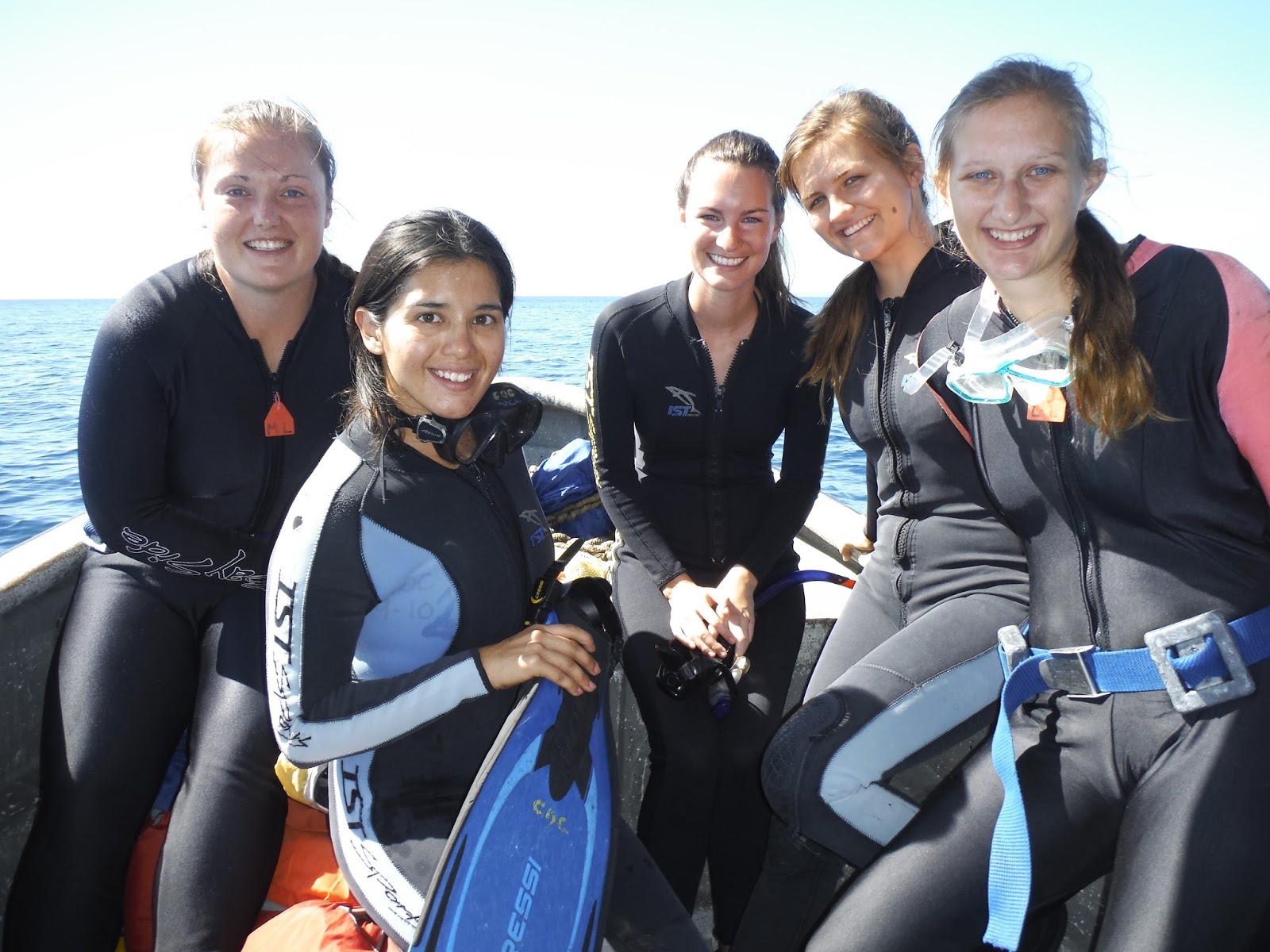
Since neither Knoxville nor Pittsburgh is close to many diving spots, I’ve been dying to go ever since I got to Panama. After nearly 2 years of scoping out locations, prices, and marine migration timing, I finally got my chance.   For the past few months, 12 of my friends and I have been planning a SCUBA trip to dive with whale sharks and tons of other interesting marine life around Isla Coiba off the Pacific coast of Veraguas. 


Fun fact- “Ver aguas” means “To see waters” and Veraguas is the only Panamanian province that touches both the Pacific and Caribbean coasts.

Accessible via the popular surfing destination of Santa Catalina, Isla Coiba is a national park with some of the most beautiful beaches I’ve seen in my entire life.  To prove it, I haven’t edited any of the pictures in this post- it really is that beautiful!  Though at one point the island was home to a penal colony, the only current development on the island is a small ranger’s station and several cabins available for rent by ANAM, the environmental ministry of Panama. 


While Santa Catalina alone is worthy of a visit, we were there strictly for the SCUBA diving.  After a long day of travel, we enjoyed each other’s company and prepared for an early day of diving. 

Since most of our group was comprised of newly certified or beginner SCUBA divers, we were all a little anxious for the dives we’d be doing the next day- especially considering the dive shop’s slogan, “Sharks guaranteed!” Even though we were excited to dive with the giant but harmless whale sharks, the idea of diving with varieties that had pointier teeth was a little discomforting.


Since diving is always better in pairs or smaller groups, we separated into two boats and headed out to Isla Coiba, about an hour’s boat ride away from Santa Catalina, early the next morning.  Though I haven’t actually been diving in the ocean before (I was certified in the quarries of East Tennessee), even I feel pretty confident in saying that the diving in Coiba was incredible.  We swam through schools of hundreds of beautiful tropical fish, watched sting rays jump into the air, came within a few feet of peaceful sleeping sharks (small enough to be okay with me), and even found a seahorse bouncing around some coral! 

Even though my group didn’t actually get to see the whale sharks, we all had a great time and I would still highly recommend the area to both snorkelers and SCUBA divers, regardless of whether you can plan your trip around whale shark season J


Transportation to Santa Catalina 

Ideally, you’ll want to get a bus to Sona, Veraguas.  If you’re coming from Bocas though, you’ll need to take a bus to Santiago and then catch a Sona bus from there.  They leave about once an hour.  After arriving in Sona, walk to the Santa Catalina bus terminal (about 5 minutes down the road) and take the 4x daily two-hour bus to Santa Catalina.  The last bus leaves before 5, so make sure not to miss it!  Over all, the trip costs less than $5 each way. 

Diving around Isla Coiba

The good diving is all situated around Isla Coiba, about an hour’s boat ride away, so if you’re interested in going, you’ll definitely need to go through a diving company.  We went with Coiba Dive Center and were very happy with our trip.  Count on paying ~$150 for a 3 tank dive, all rentals and transportation from Santa Catalina included.