Showing posts with label life in site. Show all posts

Thursday, July 30, 2015

Saying Goodbye

“All good things must come to an end, but I wouldn’t have wanted it to end any other way or with any other people.”


Just about a month ago I left my site for the last time, and man, it was rough.  I had been so busy thinking about and planning for my upcoming cross-country move that I had spent very little time dwelling on my looming departure or preparing for a going away party.  Having heard numerous disappointing accounts of despedidas (going away parties) going wrong, I had very little expectations for anything my gente might put together. 

And honestly, I was okay with that. 

So I was moved to tears (nearing sobs, if we´re being honest) when various community members organized not one, but two events to show me how much my two years had meant to them.  My actual despedida was an official party organized by one of the teachers in our little school.  Like me, she´s not from the village and her family lives about 12 hours away, so she understood more than most what I was going through when I went through feelings of loneliness and isolation. 

Each family in the community contributed $5 (almost a whole day´s wages) in order to provide a community lunch and gifts for me.  They decorated our community pavilion and then, one by one, they stood up and shared with me their favorite memories and their thanks for how much Peace Corps has done for the community and how much they would miss me.  Many of the families even made me extra gifts like hand-crocheted bags, jewelry, and hair accessories.  When it was finally my turn to speak, I blinked back tears and tried to focus on the speech that I had been practicing for the last week. 

Despite my best intentions, I only made it through a few sentences.  Later on in the day I mentioned to someone how frustrated I was that I hadn´t been able to share all of the thoughts, feelings, and memories that I had wanted to.  In response, she told me, “I understand.  But Geli, what you couldn´t say with your mouth, you said with your eyes.”

The despedida finished after lunch, and after a community photo shoot I spent the afternoon visiting as many families as I could, knowing this would be my last chance to say goodbye. 

After dinner with some neighbors, I planned to have my final meeting to make coffee on our new eco-stove and answer any last questions the community members may have had abou the project.  I expected there to be a handful of people who would spend 20 or 30 minutes with me but was surprised by a second despedida!

More than 40 people- men, women, children, and teenagers- showed up with Johnny cakes (my favorite local coconut bread) and a cake that one of my Baking & Business students had made for me.  After making coffee and enjoying the food, a teenager who I had sent to one of Peace Corps´ youth camps suggested that anyone who had not been able to attend the earlier despedida take the opportunity to share memories and thanks.  “But first,” he said, “everyone should turn off their flashlights so that everyone can cry and nobody will feel bad about it.”

In two years, I had never once seen anyone in the village cry, so seeing such strong emotions prompted by my departure meant more to me than I could even begin to describe in a blog post. 

Not having access to electricity, people generally go to bed quite early in my town, but on that night my neighbors and I stayed up together until almost 1 am, after a while not really saying much but also not wanting to end the night, and thus, my two years in the village.  Almost painfully, I finally made it back to my house where I finished packing up my things and tucked myself into my hammock one last time. 

As my favorite taxi driver picked Massy and I up at 6 am the next morning, I said final goodbyes to one of my favorite families who had gotten up extra early to see me off.  They prayed for me and I promised that I would call as soon as I arrived safe in my new house, knowing that it would be a long time before it becomes a home like the one I was now leaving behind.   

Even Rolando, my sweet taxi driver, shared in the goodbyes.  “The town may have other Peace Corps volunteers,” he said, “but there will always be only one Geli.” 


"We will miss you a lot.  We will remember you forever.  Thank you for everything you have given us, and may God bless you forever."


Wednesday, May 6, 2015

The Personal Identity and Double Lives of Peace Corps Volunteers


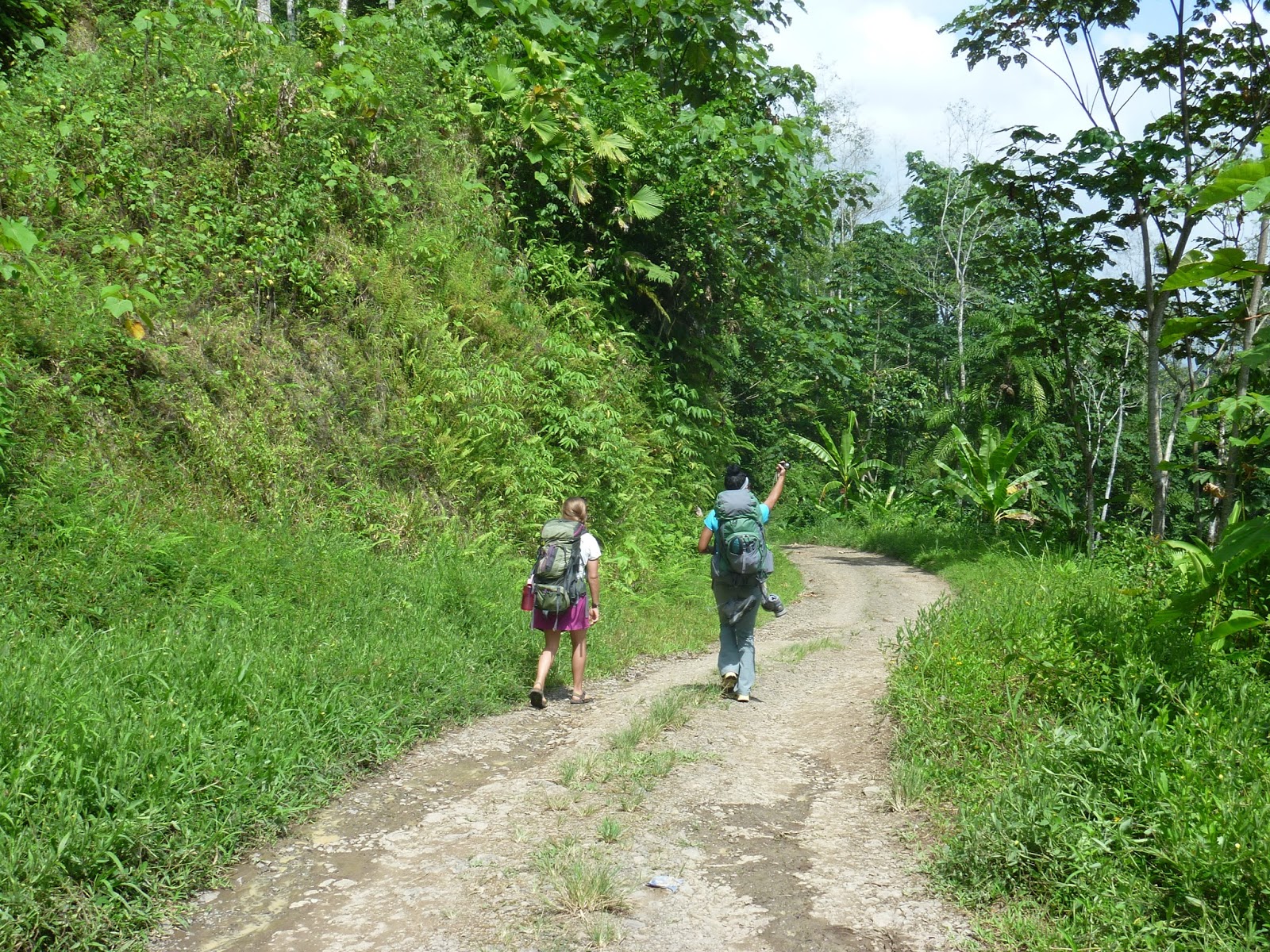
The chiva driver stops at the top of the gravel trail that leads into my site, I drag my grocery filled backpack off the truck, sit down on the bench to procrastinate the inevitable, and call my dad back home.  It’s not long before the tears start and I dread making the 40-minute hike into a village where I will once again become the only gringa, the only English-speaker, the only woman over 20 without children, and the only person who has experienced more than this little section of Panama. 

A year and a half later, I’ve finally learned to cherish coming home to my tiny, loving community, despite our many differences, but that doesn’t mean I don’t remember the anxiety or still occasionally struggle with my personal identity in and out of site. 

In these little bubbles that have been created for us, it seems that many other volunteers experience the same types of struggles with isolation, loneliness, and identity, and I don’t think it’s talked about near enough. 

Even now, I feel like I’m sometimes exhibiting a double life.  In site my people know me as Geli.  This person usually dresses in old clothes and has her hair in a ponytail, goes to bed by 9 pm without fail, makes tons of corny jokes, eats healthy foods, never wears anything shorter than knee length, is known for saving money, and is almost always cheerful.  Then there’s volunteer Abby, the out of site version of me.  She loves looking nice, going to the beach in an actual bathing suit, enjoys sarcastic humor, will eat chocolate at any and every turn, and doesn’t mind spending money to go out with friends or have a nice meal.  Though none of those characteristics are mutually exclusive, the way I exhibit them is. 

Typical Panama me- Casual outfit, no makeup, no fancy hairstyle.  If I'm wearing accessories, they probably make me look like a hippie (local jewelry, large tote bags, a dirty watch, etc.)

Typical United States Me- in a nice outfit with my makeup done, hair curled or straightened, and look completed with multiple accessories.

My people know me and love me.  But they love their version of me, the version that I’ve used to integrate into their culture without causing any more stress or drama than is necessary.  The poor farmers I live with make less than $10 a day, are married with children at an age younger than my little sister, have never traveled more than a few hours from their birthplace, and have only a few sets of clothes- all of them very modest and very plain.  Their lifestyle is so different than the type of life I lead out of site, and for them to see me in normal clothes, shopping for a new digital camera, or spending more on a meal or bottle of wine than they make in a day would drastically alter their perception of who I am, and not in a good way. 

I love my people, and when I’m in site, they’re all I have.  But the relationships you have with others are undoubtedly altered when you feel like you can’t be your whole self with them, and that’s one of the biggest challenges many Peace Corps volunteers will face early in their service.  Some will say that this anxiety is our fault and that only by showing our whole and true selves can we really connect with the people we’re serving. I would encourage these people to come into my site, wearing short shorts or openly talking about how much money they’ve spent on their things, and just see if any of the women will work with you.  For me, that’s not an option. 

This type of struggle isn’t just limited to my site- other volunteers see me so much differently than the type of person I saw myself as when I left the United States.  My friends here have seen me dirty, smelly, sick with a variety of illnesses and/or fungus infections, all while wearing moldy and/or ill-fitting clothes.  High school me would be dying right about now. 

Despite the emotional challenge this dilemma presents, maybe it’s a good thing.  Though I didn’t like having to compartmentalize myself, I am glad that this experience has challenged me physically, mentally, and emotionally, and I am especially happy that it has forced me to change my perception of personal appearance and ask myself which characteristics really make us who we are. 


A typical in-site look = top + bottom (matching is optional) + braid or ponytail.  No makeup or shoes required

Cute hiking/working outfits?  haha, no.  Bottom + top (again, no matching needed) + boots.  Bonus points will be given for being muddy and sweaty. 

Dressed up in site = top + bottom (matching preferred) + braid.  Shoes preferred, but makeup still not required.  

Me in a nagua, a typical Ngäbe dress, which is also the most unflattering piece of clothing I ever plan on owning.

Before Peace Corps, it had been almost 8 years since I routinely went in public without makeup.  This earlier version of me wouldn’t have felt “whole” or put together without all of the surface level things that I thought helped make me the person I was.  

I may have been one of the last people in our training group to quit wearing makeup anytime I left the house or to finally accept that my chiffon skirts and beautiful J.Crew blouses just weren’t meant for the campo, but growing into Geli, my scruffy, fun loving, in-site alter ego, has allowed me to do something that few people ever get to do.  I’ve spent two years being made to feel beautiful, complete, and loved by people who have never even seen me in makeup, nice clothes, or in possession of the fancy things we as Americans seem to value so much.   All of that finally had me questioning- am I really leading a double life as I had previously thought, or have I finally learned what truly makes me, me?

Thursday, March 12, 2015

Why You Should Definitely Get a Pet When You Join the Peace Corps


Being an animal lover and lifetime pet owner, it took me a grand total of 2 hours between first arriving in my Peace Corps site and selecting what would become my most inseparable friend for the next two years. 

Sure, there are a handful of arguments against adopting a pet while serving in the Peace Corps, but in my opinion, all of those pale against the many positives that will come along with your new best friend(s). 

Before I go any further, let me just put to rest the argument that volunteers don’t make enough money to cover a pet. Both my dog and “my” cat are well fed, vaccinated, and plenty spoiled, but I’m still almost positive that I spend more money a month on ducles than on pet expenses.  If not, it’s close. 
Side note- I’m working on a post about money and expenses as a PCV, so look for that soon!

Just in case you haven’t been following my blog or haven’t seen the hundreds of pictures that are likely on my Facebook, we’ll start from the beginning of my Peace Corps pets story:  My host family’s dog, Gringa (“gringa” is also slang for “white girl,” but dog Gringa was named for her green eyes well before human gringa showed up), had a litter of puppies just two days before I arrived in town.  Kids being kids, my new host brothers couldn’t wait to show the newborns to me, and me being me, I couldn’t wait to pick one out for myself.  So I did.  Long story short, Massy and I became fast friends and I’ve been convinced of the many pet-provided benefits ever since. 


Benefit #1: Pets give a good end to a bad day.

No matter how positive you are, how hard you work, or how much you smile in the face of challenges, you WILL have days as a Peace Corps volunteer when you return to your house at night and do everything you can not to cry or dwell on all of the awful, sad, and potentially gross things that happened to you.  Though, thankfully, those days will be the minority, having a warm, cuddly friend willing to listen to your complaints without saying anything but “I love you.  Let’s have a snack.” with those sweet eyes of his (or hers) will give a better ending to any day- good or bad.


Benefit #2: It will never again be this easy to adopt and care for a pet.

No pet adoption agencies, no fees, and no expensive veterinary certifications (though you should still get shots done.  Here they're $2-4 per injection).  Plus, since you will likely live in very simple housing with little to no expensive possessions, there's almost no chance of your new dog or cat ruining something! 


Benefit #3: You never have to go anywhere alone!

Since my community is quite spread out, I spend several hours each week hiking through the monte to visit families or work on farms.  I used to get a little worried about getting lost, and even now I still get a little bored and/or lonely when I’ve been walking awhile.  Other days, I’m stuck in my house all day long waiting out one of our familiar Bocas rainstorms.  Either way, there’s the common theme of being alone and lonely.  Thanks to Massy, though, I never have to deal with that!  My sweet little jungle dog follows me wherever I go- if that means spending all day in our hut, he’ll be snuggled at my feet (as he is at this moment) and if that means going on a 9 hour hiking trip, than he’ll be leading the charge. 


Benefit #4: The people will love your new friend.

True story:  One day, early on in my service, Massy and I were hiking in the neighboring area.  We came across a family I hadn’t met yet and they asked me, “¿CĂłmo se llama?”  When I responded with my name, they replied, “No, not you.  That pretty dog.”  This has repeated itself many times, in many forms.  Everyone within a 3 hour walking radius of my town knows Massy’s name even though I’m not completely sure the same could be said for mine.  Despite the fact that many dogs here are underfed and neglected and NO dogs here receive the type of affection I give Massy, the people are enamored with him and frequently treat him quite differently than their own dogs.  In fact, many families are often quite excited to tell me that they’ve been sharing their people food with Massy and I can’t even begin to count the number of times people have begged for him when I finish my service. 
Though I like to think that Massy is special, it doesn’t seem like this phenomenon is unique to us.  If you check out the Peace Corps Pets photo album on Facebook, many owners mention the locals’ unique fascination with volunteers’ furry friends.


Benefit #5: Your house will be well guarded.

Though Massy knows and loves everyone in town, that doesn’t stop him from loudly alerting me to any and every approaching visitor.  Whether it’s a machete-welding man or a shy four-year-old girl, Massy is my little alarm system.  Funny enough- though Massy has never once bitten anyone or showed any type of human aggression, this simple act of barking at visitors has convinced the people that anyone who tried to break into my house or harm me would first have to face the wrath of my sweet little jungle dog.  They’re probably right. 


Benefit #6: Your pet can bring a little bit of Peace Corps home to the United States.

Sometimes when Massy and I lay sprawled out on my wooden floor, sweating from the humid Panama heat, I dream about what it will be like to take him running in a dog park in the beautiful, cool East Tennessee fall.  It certainly seems like bliss, especially in that overheated moment.  Before making the decision to adopt a pet as a Peace Corps volunteer, I did my research and was happy to learn that while still present, the costs of bringing my future dog home from Panama would not be too great.  Though I’m not sure exactly what my plan is yet or where I’ll be living, Massy has already got someone (other than me) quite important wrapped around his little paw- my farm owning dad.  So, while my first choice would obviously be to have my little buddy with me wherever I go, I know that he has somewhere to live that’s big and open with plenty of mud.  Taking Massy home will be like taking a little bit of my Peace Corps service home, and I can’t wait to see that little bit of my two worlds together. 


For those of you that have asked: Massy is named after my pre-Peace Corps dog, Sammy, who died just a few weeks after I arrived in Panama (switch the S and the M and Sammy becomes Massy). Like Sammy (Sam), Massy also frequently goes by a shortened version of his name (Mas).

Thursday, October 30, 2014

The Five Things I Couldn’t Live Without in the Peace Corps


A good, big backpack.
As you may have guessed by this and some of my other posts, I didn’t own any outdoor equipment before my move to Panama.  I figured that my giant, 70 Liter NorthFace backpack would be used once to move to my site and once to move home, but that was before I had to hike 2 weeks worth of groceries into site or carry a week’s worth of stuff throughout the country.  I use this bag almost every time I leave my site, and can’t imagine having to use one that didn’t have plenty of space or good support.  


My Chacos.
Though I grew up in the countryside of East Tennessee, I never would’ve considered myself an outdoorsy type of person before joining the Peace Corps.  I couldn’t remember the last time I had gone camping and almost all of the outdoor activities I did participate in focused more on the outfit and photos than anything else.   Needless to say, Chacos had never claimed a spot in my closet.  But oh, how times have changed.  My trusty outdoor sandals are the only shoes that can put up with anything I throw at them.  From gravel to grass, flooded rivers to muddy slopes, it only took a month without them (my hand-me-down pair finally gave in last December) to realize that no other Panamanian shoe can fill my city and village needs.


Massy.
I picked out my sweet pup two days after he was born and we’ve been inseparable ever since.  Whether we spend the day hanging out in my house or are on the run from dawn to dusk, this dog can put a smile on my face no matter how rough the day may be.  I get a lot of questions about what it’s like to keep a pet as a Peace Corps Volunteer, and I can’t repeat it enough- the benefits outweigh any and every cost.  Especially when you’re lucky enough to end up with one as great as this little guy. 


My iPad.

I had no idea how much free time I’d need to fill while serving as a Peace Corps Volunteer.  Obviously, I like to be productive as much as I can, but I still found myself overwhelmed by endless, empty rainy afternoons, unlit evenings, and hours upon hours in busses and waiting for busses.  The iPad my dad got me last Christmas has made me so, so much happier.  I’ve powered through tons of books- no headlamp required, filled hours of public transport with podcasts and document editing, and checked my social media accounts at the drop off any wifi zone’s hat.  Though I haven’t had experience with other tablets, I love the durability and versatility of my iPad, and the battery life isn’t too bad either.  Just make sure you stock it with a strong, waterproof case to guard it from any children or flash rainstorms. 


Hammocks. 
You’d be hard pressed to find a Peace Corps Panama volunteer who doesn’t own at least one hammock, and I’d be quick to claim that there’s good reason behind that.  Our hammocks are the perfect place to sit back and relax with a book, take an afternoon siesta, chat with a community member, or daydream about all the foods we’re missing.  Parachute hammocks do double duty since they’re the perfect accompaniment to any site visit in which bedding could be questionable.  A comfortable night’s sleep that can roll up into the size of my Nalgene?  I’ll take two, thanks. 

Monday, October 27, 2014

Kids and Money: Increasing a Village’s Financial Literacy


A few months back I was looking for resources on children’s financial literacy online (gotta start 'em young!) and stumbled upon a really great workbook from the Cleveland Fed- available in English here and Spanish here.  Available for free- printed or mailed, in English or Spanish- this workbook is awesome.  It’s a great general overview of money management for late elementary school aged children and covers money and finance in three parts: earn, spend, and save. 

Since kids generally seem to be more open to new ideas and are still forming their long-term habits and opinions, I was especially excited introduce this information to the elementary school classes in my site.  My friend Zoe, who my community loves, came to visit and help out with the charla and was a ton of help.  I’ve noticed that community members, kids included, really seem to put more weight on things I teach if I bring in someone from outside the community. 

We spent two hours teaching about 20 4th, 5th, and 6th graders about how they can use their skills to earn a little bit of extra money, why they shouldn’t spend everything they have, and how to be an informed buyer.  I was really proud of how well they did on their exercises, and am excited to help them with their plans to earn money in the future.  One of the older children is even saving money to buy a piglet to raise and sell.  If he grows a nice sized pig into full maturity, he could stand to earn almost $100- a 300% return on investment!

I’m going to be going back for a little follow-up and homework review this coming week.  Hopefully I’ll find book bags full of completed activities and minds eager to learn more about finance!  As always, if you’ve seen any resources that you think we could benefit by, please send me an email at abbyexplores@gmail.com.  We’re always excited to try new things!