Thursday, March 12, 2015

Why You Should Definitely Get a Pet When You Join the Peace Corps


Being an animal lover and lifetime pet owner, it took me a grand total of 2 hours between first arriving in my Peace Corps site and selecting what would become my most inseparable friend for the next two years. 

Sure, there are a handful of arguments against adopting a pet while serving in the Peace Corps, but in my opinion, all of those pale against the many positives that will come along with your new best friend(s). 

Before I go any further, let me just put to rest the argument that volunteers don’t make enough money to cover a pet. Both my dog and “my” cat are well fed, vaccinated, and plenty spoiled, but I’m still almost positive that I spend more money a month on ducles than on pet expenses.  If not, it’s close. 
Side note- I’m working on a post about money and expenses as a PCV, so look for that soon!

Just in case you haven’t been following my blog or haven’t seen the hundreds of pictures that are likely on my Facebook, we’ll start from the beginning of my Peace Corps pets story:  My host family’s dog, Gringa (“gringa” is also slang for “white girl,” but dog Gringa was named for her green eyes well before human gringa showed up), had a litter of puppies just two days before I arrived in town.  Kids being kids, my new host brothers couldn’t wait to show the newborns to me, and me being me, I couldn’t wait to pick one out for myself.  So I did.  Long story short, Massy and I became fast friends and I’ve been convinced of the many pet-provided benefits ever since. 


Benefit #1: Pets give a good end to a bad day.

No matter how positive you are, how hard you work, or how much you smile in the face of challenges, you WILL have days as a Peace Corps volunteer when you return to your house at night and do everything you can not to cry or dwell on all of the awful, sad, and potentially gross things that happened to you.  Though, thankfully, those days will be the minority, having a warm, cuddly friend willing to listen to your complaints without saying anything but “I love you.  Let’s have a snack.” with those sweet eyes of his (or hers) will give a better ending to any day- good or bad.


Benefit #2: It will never again be this easy to adopt and care for a pet.

No pet adoption agencies, no fees, and no expensive veterinary certifications (though you should still get shots done.  Here they're $2-4 per injection).  Plus, since you will likely live in very simple housing with little to no expensive possessions, there's almost no chance of your new dog or cat ruining something! 


Benefit #3: You never have to go anywhere alone!

Since my community is quite spread out, I spend several hours each week hiking through the monte to visit families or work on farms.  I used to get a little worried about getting lost, and even now I still get a little bored and/or lonely when I’ve been walking awhile.  Other days, I’m stuck in my house all day long waiting out one of our familiar Bocas rainstorms.  Either way, there’s the common theme of being alone and lonely.  Thanks to Massy, though, I never have to deal with that!  My sweet little jungle dog follows me wherever I go- if that means spending all day in our hut, he’ll be snuggled at my feet (as he is at this moment) and if that means going on a 9 hour hiking trip, than he’ll be leading the charge. 


Benefit #4: The people will love your new friend.

True story:  One day, early on in my service, Massy and I were hiking in the neighboring area.  We came across a family I hadn’t met yet and they asked me, “¿Cómo se llama?”  When I responded with my name, they replied, “No, not you.  That pretty dog.”  This has repeated itself many times, in many forms.  Everyone within a 3 hour walking radius of my town knows Massy’s name even though I’m not completely sure the same could be said for mine.  Despite the fact that many dogs here are underfed and neglected and NO dogs here receive the type of affection I give Massy, the people are enamored with him and frequently treat him quite differently than their own dogs.  In fact, many families are often quite excited to tell me that they’ve been sharing their people food with Massy and I can’t even begin to count the number of times people have begged for him when I finish my service. 
Though I like to think that Massy is special, it doesn’t seem like this phenomenon is unique to us.  If you check out the Peace Corps Pets photo album on Facebook, many owners mention the locals’ unique fascination with volunteers’ furry friends.


Benefit #5: Your house will be well guarded.

Though Massy knows and loves everyone in town, that doesn’t stop him from loudly alerting me to any and every approaching visitor.  Whether it’s a machete-welding man or a shy four-year-old girl, Massy is my little alarm system.  Funny enough- though Massy has never once bitten anyone or showed any type of human aggression, this simple act of barking at visitors has convinced the people that anyone who tried to break into my house or harm me would first have to face the wrath of my sweet little jungle dog.  They’re probably right. 


Benefit #6: Your pet can bring a little bit of Peace Corps home to the United States.

Sometimes when Massy and I lay sprawled out on my wooden floor, sweating from the humid Panama heat, I dream about what it will be like to take him running in a dog park in the beautiful, cool East Tennessee fall.  It certainly seems like bliss, especially in that overheated moment.  Before making the decision to adopt a pet as a Peace Corps volunteer, I did my research and was happy to learn that while still present, the costs of bringing my future dog home from Panama would not be too great.  Though I’m not sure exactly what my plan is yet or where I’ll be living, Massy has already got someone (other than me) quite important wrapped around his little paw- my farm owning dad.  So, while my first choice would obviously be to have my little buddy with me wherever I go, I know that he has somewhere to live that’s big and open with plenty of mud.  Taking Massy home will be like taking a little bit of my Peace Corps service home, and I can’t wait to see that little bit of my two worlds together. 


For those of you that have asked: Massy is named after my pre-Peace Corps dog, Sammy, who died just a few weeks after I arrived in Panama (switch the S and the M and Sammy becomes Massy). Like Sammy (Sam), Massy also frequently goes by a shortened version of his name (Mas).

Tuesday, March 3, 2015

Friends, Diving, and Whale Sharks


Whether you come to Panama for a month or 3 years, chances are that you’ll have a Panama to-do list.  Seeing ships pass through the famous Panama Canal, swimming in the tropical waters of Bocas del Toro, and sampling the world renowned coffee in Boquete are all popular activities, but with 2 years to spend, my to-do’s have been getting more and more specific.

As someone with a little more time and flexibility, I’ve been able to plan my trips around not only specific destinations, but also around the best times of the year to visit.  From once a year ferias to months long animal migration patterns, I’m happy to use my flexibility to my advantage and see a whole new side of Panama.  If you think you can see all of our little country in a week or two, you’re definitely doing it wrong!


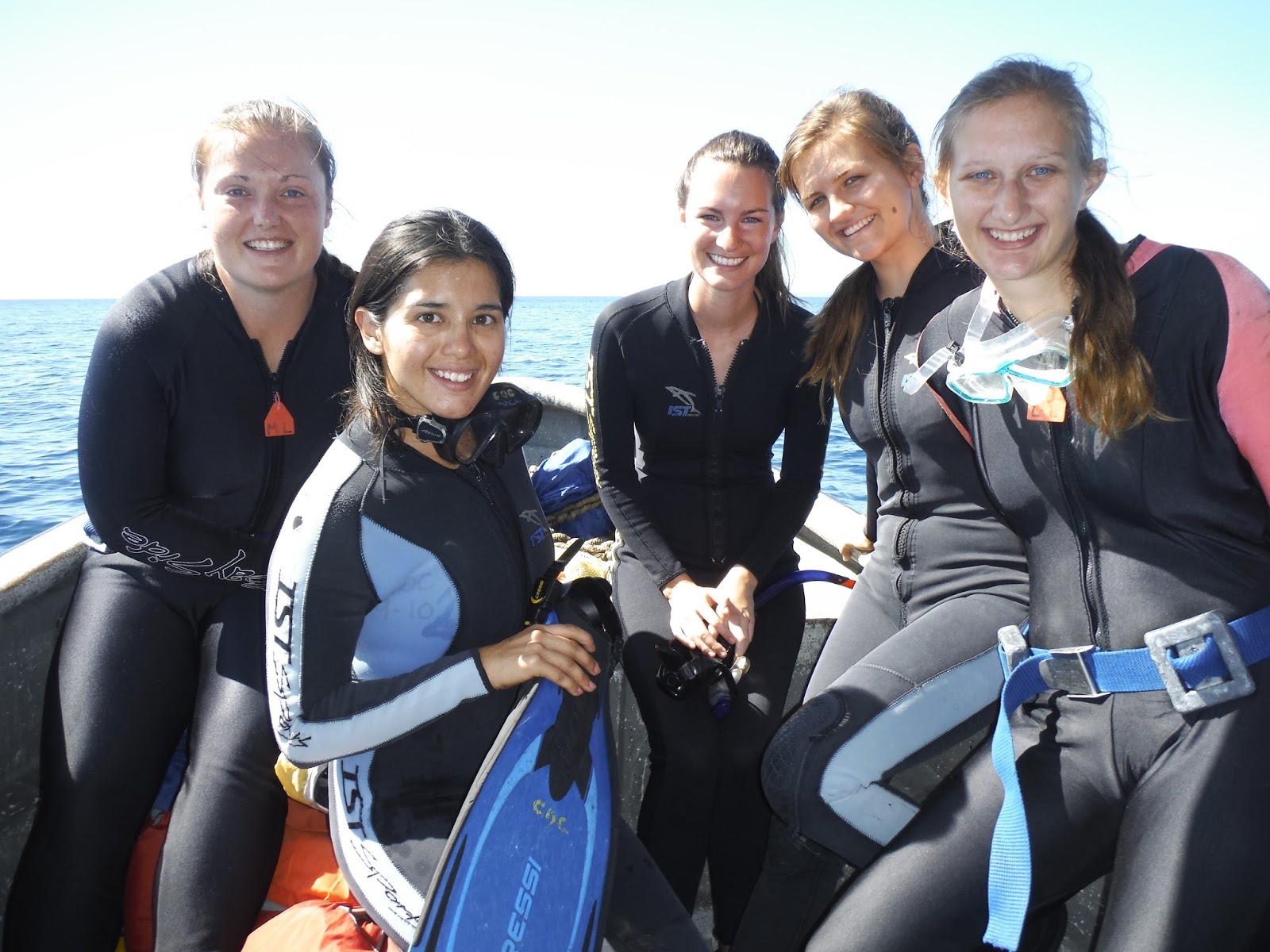
Since neither Knoxville nor Pittsburgh is close to many diving spots, I’ve been dying to go ever since I got to Panama. After nearly 2 years of scoping out locations, prices, and marine migration timing, I finally got my chance.   For the past few months, 12 of my friends and I have been planning a SCUBA trip to dive with whale sharks and tons of other interesting marine life around Isla Coiba off the Pacific coast of Veraguas. 


Fun fact- “Ver aguas” means “To see waters” and Veraguas is the only Panamanian province that touches both the Pacific and Caribbean coasts.

Accessible via the popular surfing destination of Santa Catalina, Isla Coiba is a national park with some of the most beautiful beaches I’ve seen in my entire life.  To prove it, I haven’t edited any of the pictures in this post- it really is that beautiful!  Though at one point the island was home to a penal colony, the only current development on the island is a small ranger’s station and several cabins available for rent by ANAM, the environmental ministry of Panama. 


While Santa Catalina alone is worthy of a visit, we were there strictly for the SCUBA diving.  After a long day of travel, we enjoyed each other’s company and prepared for an early day of diving. 

Since most of our group was comprised of newly certified or beginner SCUBA divers, we were all a little anxious for the dives we’d be doing the next day- especially considering the dive shop’s slogan, “Sharks guaranteed!” Even though we were excited to dive with the giant but harmless whale sharks, the idea of diving with varieties that had pointier teeth was a little discomforting.


Since diving is always better in pairs or smaller groups, we separated into two boats and headed out to Isla Coiba, about an hour’s boat ride away from Santa Catalina, early the next morning.  Though I haven’t actually been diving in the ocean before (I was certified in the quarries of East Tennessee), even I feel pretty confident in saying that the diving in Coiba was incredible.  We swam through schools of hundreds of beautiful tropical fish, watched sting rays jump into the air, came within a few feet of peaceful sleeping sharks (small enough to be okay with me), and even found a seahorse bouncing around some coral! 

Even though my group didn’t actually get to see the whale sharks, we all had a great time and I would still highly recommend the area to both snorkelers and SCUBA divers, regardless of whether you can plan your trip around whale shark season J


Transportation to Santa Catalina 

Ideally, you’ll want to get a bus to Sona, Veraguas.  If you’re coming from Bocas though, you’ll need to take a bus to Santiago and then catch a Sona bus from there.  They leave about once an hour.  After arriving in Sona, walk to the Santa Catalina bus terminal (about 5 minutes down the road) and take the 4x daily two-hour bus to Santa Catalina.  The last bus leaves before 5, so make sure not to miss it!  Over all, the trip costs less than $5 each way. 

Diving around Isla Coiba

The good diving is all situated around Isla Coiba, about an hour’s boat ride away, so if you’re interested in going, you’ll definitely need to go through a diving company.  We went with Coiba Dive Center and were very happy with our trip.  Count on paying ~$150 for a 3 tank dive, all rentals and transportation from Santa Catalina included. 


Thursday, February 5, 2015

3 Years in Panama


A few weeks ago I wrote about visiting the Darien (you can read about it here, here, here, here, and here), which was one of the coolest trips that I've gotten to do here in Panama.  In my blogs I talked about hiking through the infamous jungles of the Darien, visiting cool beaches and eating tons of delicious food, teaching about chocolate and business (2 of my favorite things) to the wonderful gente, and learning about the interesting and beautiful culture of the Emberá and Wounaan indigenous tribes.  What I didn't mention is that I had somewhat of an ulterior motive for the trip...

Peace Corps has volunteers in just about every region of Panama and though the country isn't much bigger than South Carolina, it takes a lot of work and travel to support over 200 volunteers in 9 very different and distinct provinces.  Since our office staff is limited in both personnel and location (the office is in Panama City, which is up to 14 hours of travel from the most remote sites), each province has a Regional Leader.  

Regional Leaders (RLs) are 3rd year volunteers selected by the Country Director to work in a variety of roles within each province.  RLs locate and prepare communities to be future Peace Corps sites, offer organizational and emotional support to volunteers, assist with safety and security issues, act as liaisons between Peace Corps and partner government and NGO agencies, and host regional meetings for volunteers, staff, and agencies every four months.  


Though I have always loved working with the Bocas RLs, I didn't start considering the job for myself until a few months ago.  Similar to the thought process that led me to Peace Corps in the first place, I began outlining what I wanted for myself personally and professionally when my service ends in July/August of this year.  

I love living in the jungle, but I'm also quite ready to have some modern amenities back.  Electricity? A refrigerator? Smoothies?? Internet?! Ah, yes.  I'm quite ready for those.  But am I ready to give up this beautiful, multi-cultural experience I'm having? Not quite yet.  

The more research I did, the more I realized that the Regional Leader position was just what I wanted.  I would get to live in a regional capital with access to most of the amenities that I'm missing, work in a more official and professional role with the national office and local and international government agencies, and still have frequent travel to the remote Peace Corps and potential Peace Corps sites I love so much.  


So how does the Darien play into that?  Once I decided to apply, I knew that during my interview I'd be asked about what region I wanted to work in.  While they obviously prefer to have RLs work in the same region they served in, there's usually some shifting around due to candidates and their work styles and preferences.  Since I knew one of my best Peace Corps friends from Bocas was also applying and wanted to stay in Bocas, I took that as an opportunity to look around and think a little more about where I would want to spend my 3rd year in Panama.  

Panama's cultural diversity beautiful ecological landscape make that quite a hard choice, but when I thought about which province intrigued me the most, it became quite easy- the Darien.  However, having never visited the area, it seemed pretty naive to ask to move there, hence my tour of the area.  

And herein lies the big news- An incredible week of travel and a great interview later, I'm very excited to accept my new position as the Darien Regional Leader and can't wait to move out there and get started in July.  Though my new job won't affect my current position at all, it does mean that I'll be in Panama a year longer than I thought.  I know that that's bittersweet news to my friends and family back home, but I'm sure that a month long US trip in December will help that a little bit.  

Accepting the new job has made the end of my service in Bocas feel a lot more concrete, and that's bittersweet for me as well.  I have loved the time I've had here and look forward to another great year!  


From Bocas to Darien- and Massy's coming too! 

Monday, January 26, 2015

Chocolate Week, de nuevo!

One of the things I most looked forward to during my training as a Peace Corps Volunteer was our cacao technical training- or, as I like to call it, Chocolate Week.  Since generally even the most educated and experienced agriculture volunteers have little experience working with tropical Panamanian crops like cacao, we receive an additional week-long, in-depth training a few months after arriving to our sites.  

Why the wait?  Well, sometimes you just have to experience life and work in your site to know what types of questions you need to be asking.  


Whereas the majority of Pre-Service Training is led by office staff, technical weeks during In-Service training are facilitated almost entirely by second year volunteers who have excelled in the main sub-project areas (Cacao, Coffee, and Rice and Fish Tanks).  One of my closest friends, Zoe, is the National Cacao Coordinator and together we chose to host cacao week (heretofore referred to as "chocolate week") in my site due to the relative ease of transport and local technical support.

So what did we plan for our volunteer visitors during chocolate week?  Nothing but five days of wonderful, chocolate bliss. Cacao volunteers have many projects working on both sides of the production chain ranging from farm planning to agroforestry techniques and finally (my favorite) chocolate processing and product marketing.  Since the volunteers focused on the earlier parts of the chain during Pre-Service Training, most of our week was focused on the latter steps.

Day 1 
The first day we reviewed the most tedious agroforestry technique-grafting, and also taught the volunteers about pruning since the trees weren't quite ready to be cut back until now.  

Grafting is a tricky technique that entails inserting a tiny part of a healthy tree into an older, lower producing tree.  If and when the new graft sticks, you'll eventually cut away the old tree and leave the new one to grow and take advantage of the older, more developed root systems.  This process can completely revitalize older farms, but is sadly hard to master. 

Cacao flowers-The very beginning of chocolate!

Day 2
To quote a Spanglish version of the 4-H motto, hay que (you've got to) "learn by doing." We took that to heart and threw the volunteers straight into the fire the second day by assigning them to plan and facilitate a Farmer's Field School for the producers in my site.  

Lucky for them, Zoe had pre-planned most of an amazing work-day that taught farmers how to make GPS maps of their farms and take inventories of the hundreds (or thousands) of trees that they have.  We had a very successful day and several other producers have already asked me to help with their farms next!  I'm almost jealous of the baseline data my follow-up volunteer will be inheriting...

Following a long day on the farm, we all came back to my house for my favorite part of the week- the "Chocolate Bar!"  We melted 100% cacao and dished bowls out to each volunteer who was then able to mix sweeteners (sugars, honey, and syrups), nuts, berries, and various other fillings and toppings to form their own chocolate bars (or lumpy balls, in our case). 


Day 3
To reward them for their hard work so far, we started the day off with a waterfall hike and homemade cinnamon rolls.  While enjoying our treats, we talked about the upcoming year and made work plans for the cacao projects they wanted to accomplish in their sites.  

After lunch, the volunteers helped out at one of my Baking and Business classes, where we made chocolate coconut cake and eagerly ate it while talking about the costs and potential profits of selling it.  


Day 4
Though my town has some pretty nice farms, we wanted to show the volunteers what an amazing farm looks like, so we made the "short" trip to Changuinola to tour a beautifully managed cacao farm.  A 30 minute hike, 20 minute bus ride, 40 minute bus ride, and 10 minute truck ride later we arrived at the farm where we saw tree nurseries, exemplary grafting and pruning, and perfectly planned rows.  
Since Peace Corps likes to work with host country governmental agencies, we also visited with our local branch of the ministry of agriculture to share our work plans for the coming year and talk about how we can work together to help local communities.


Day 5
Finally we arrived on the last day of chocolate week and once again made the trip out of my site- this time to take the famous Rio Oeste Chocolate Tour and then to meet with COCABO, the local cacao cooperative that most of our producers sell to.  

I was especially excited about the chocolate tour in Rio Oeste since it's both walking distance from my town (a long walk, but a walk nonetheless) and widely regarded as one of the biggest "must-do's" in the province of Bocas del Toro.  Though we didn't learn anything new on the farm tour, it was neat to see how the information was presented to tourists, and I could definitely taste a delicious difference in their chocolates from the ones produced in my town.  Since one of my community counterparts accompanied us on the tour, I'm excited to work with him in the future to determine which techniques and ideas we can implement for our producers as well. 

A Ngäbe farmer and his cacao dryer

Hiking along the Rio Oeste Chocolate Tour

A Ngäbe woman demonstrating the traditional way of grinding chocolate by hand

Narciso, one of my most active community members, accompanied us on our tour

Everyone loves chocolate

The new volunteers - Whitney + Zoe and I after tech week

So now it's one for the books (and the blog)- Chocolate week 2015 was a delicious success.  

Wednesday, January 7, 2015

Panama from Dad's Perspective


Imagine your daughter, a girl you love, cherish and have always tried to protect, moving to a Third World country (Abby’s note: Panama is not a third world country.  We’re considered “developing”), living in a community of local indigenous, with no electricity or running water (We usually have running water… it was just out during his visit), for 26 months.  Many Peace Corps parents have experienced this very phenomenon since 1962 when John F. Kennedy first created what has become a shining example of young Americans volunteering in the most difficult of circumstances.


Abigail “Abby” Lauren Bryant graduated from Saint Vincent College, Latrobe, Pennsylvania in May of 2013 with a degree in Business Administration.  A year prior to that, in May of 2012, she had decided to apply for a position with the Peace Corps, and after various levels of scrutiny, was accepted in February of 2013.  I was not surprised that she was accepted as she has always been very driven, setting goals and achieving them. 

As with many fathers, I always did my best to keep her safe.  We lived in very safe area, and I maintained contact with personnel at both her high school and college.  While trying not to be bothersome, I was known on a first-name basis.  Dave, the Vice President of Admissions at Saint Vincent, was my main contact and the individual who helped me to know that Abby was safe in college.

When you become a Peace Corps parent, it is very difficult because you truly fear for your child’s safety.  I could not pick up a telephone and check with a “Dave” to see how Abby was doing.  Because of the very poor cellular service where Abby was/is assigned, I also found that I could not call her whenever I felt the need or desire.  She would call if and when she had service.

I am grateful for the opportunities to visit Abby and her community and I would strongly encourage every Peace Corps parent to do the same.  Shortly after she left in June of 2013, we made arrangements for me to visit her for Christmas and New Year.


Abby lives in **** (for security reasons, I prefer not to share the name of my town online), Bocas del Toro, Panama.  Her village (“her people” as she so often refers to them) is populated by approximately 250 Ngäbe indigenous people.  It was during that first visit that I became comfortable with the fact that Abby was “safe.” In a conversation with Juan Castillo, the patriarch of a large family (10 children and untold grandchildren), translated by Abby, told me not to worry because when I was not with her, he was her “Father.”  I knew I could trust him and it certainly helped with some of my concerns.


There is a true sense of community in ****.  One of the most important things to do during both of my visits to her community was to pasear, that is, “To spend time with your neighbors.”  It is also part of the tradition to give the visitor something to eat or drink.  I enjoyed some truly interesting, local drinks of coffee, hot chocolate, and fresh coconut water that I drank straight from the coconut at the house of Pedro and Chevela.


Speaking of homes, as a visiting Peace Corps parent, I have felt very welcome into homes of people who speak a different language than me.  With Abby interpreting, I got to know many in her community, and I believed Abraham Castillo when he told me I was part of their community.  I had the opportunity to show my gratitude this most recent visit when I purchased a whole pig that was cooked over an open fire and served as part of the 2015 New Year celebration.  In addition to my many pictures with “Abby’s people”, some of my most prized possessions are the chakaras given to me Ramon and Avilia Tera and Juan Castillo’s family.  And last year, I was given the opportunity to purchase a hand-made hammock from Juan’s wife.  After I learned how many hours went into making the chakaras and the hammock, I can truly say that these gifts will be displayed in my own home with much pride.


As a Peace Corps volunteer, Abby has further developed her strong sense of character, has demonstrated an uncanny ability to do so much with so little, and has learned important lessons that will serve her the rest of her life.  I also know from talking with her that her fellow Peace Corps volunteers will be friends for life.

Is it hard to be a Peace Corps parent?  You bet it is.  However, the joy of seeing your child accomplish so much in a very trying atmosphere and the opportunity to share in her community is but one of the many trade-offs a parent gets when your precious daughter leaves for a place that seems, at times, unknown.


To my dad- Thanks for putting up with all the hiking, lack of amenities, and "extras" that come along with campo life!  I'm sure your visit will be the talk of the town for years to come... literally :)